Polynucleotide Treatment
Polynucleotide treatments (PN / PDRN) are regenerative aesthetic injectables designed to improve skin quality—hydration, elasticity, and texture—rather than adding volume. These biostimulators support the skin’s natural repair processes and collagen environment over time.
Benefits of Polynucleotides
Improves Skin Texture
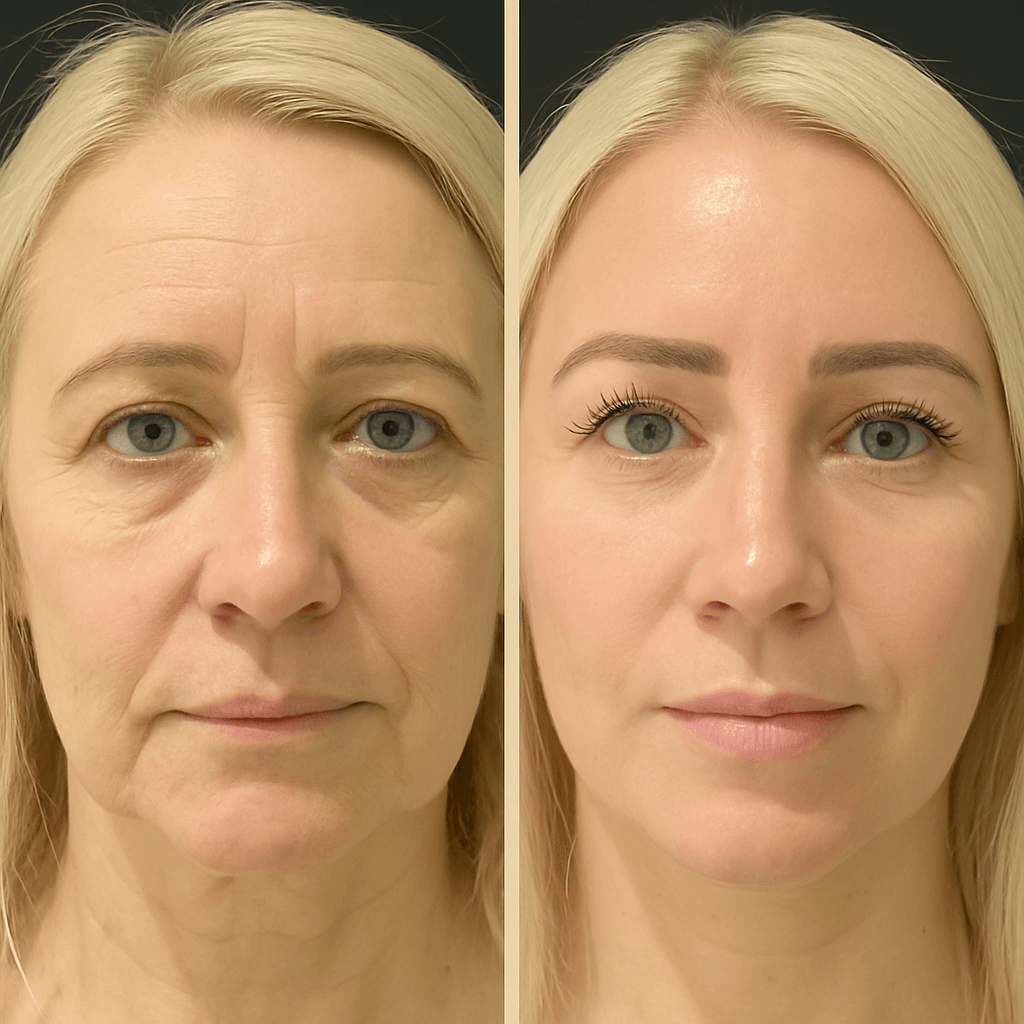
Refines texture, softens fine lines and improves overall skin quality—especially where skin looks thin, tired or dehydrated.
Hydration & Elasticity
Supports skin hydration and elasticity by improving the dermal environment and stimulating collagen and elastin activity.
Under-Eye Refresh
Perfect for the delicate under-eye area to improve skin quality and fine lines without the “puffiness” associated with traditional fillers.
Gradual Regeneration
A progressive treatment where results build naturally over weeks, providing subtle yet deeply restorative improvements.
Treatment Details
Skin Quality Optimisation & Repair
Polynucleotides (including related compounds like PDRN used in regenerative medicine) are described in the medical literature as DNA-derived biopolymers with tissue-repair and anti-inflammatory activity. In aesthetics, that translates to “skin quality” goals—hydration, fine texture, and strengthening thin areas—rather than shape/volume change.
How It Works
Micro-Injection Delivery
Administered as a series of small injections (needle blebs that settle quickly, or a cannula technique depending on the area) directly into the skin.
Biostimulation Over Time
The aim is to support a healthier dermal environment (collagen/elastin function, hydration), with improvements appearing progressively rather than instantly.
Course-Based Protocol
To achieve optimal skin regeneration, polynucleotides are best performed as a course of 2–4 sessions, spaced about 2–4 weeks apart.
15-30 Mins
Treatment Duration
2-4 Sessions
Spaced 2-4 weeks apart
Minimal Downtime
Small bumps/redness possible
*Consultation included.
Please arrive 10 minutes early.
Steps of Treatment
A careful, step-by-step approach to ensure maximum comfort and optimal regenerative results.
Consultation & Assessment
We assess your concern (under-eyes, fine lines, texture, scarring, dullness) and build a plan around realistic “skin quality” outcomes—polynucleotides generally aren’t a lifting/reshaping treatment.
Preparation
Skin is cleansed; a numbing cream may be used if multiple injection points are planned for maximum comfort.
Polynucleotide Injections
Product is injected into the treatment area using a fine needle (creating small blebs) or sometimes via a cannula technique for even distribution, depending on anatomy.
Aftercare & Course Planning
You’ll receive aftercare guidance and we schedule the next session (many protocols recommend repeating every 2–4 weeks for a full course).
Clinical Protocol
Important guidelines to ensure safety and maximize regenerative outcomes.
Pre-Care Guidelines
Disclose Allergies
Many PN products are derived from fish DNA. Inform us of any fish/seafood allergies, and note that it may be unsuitable for vegans/vegetarians.
Pregnancy & Breastfeeding
Polynucleotide injections are not suitable if you are pregnant, intending to become pregnant, or currently breastfeeding.
Manage Expectations
Set expectations for course-based results: PN is for skin quality improvement building over weeks, rather than offering an instant 'facelift'.
Aftercare Guidelines
Normal Short-Term Effects
Small bumps at injection points, tiny red dots, mild swelling, and possible bruising are common. Bumps usually settle within hours to a couple of days.
Makeup & Heat Avoidance
Do not apply makeup for ~12 hours. Avoid laser treatments, excessive heat, and strict sun exposure for the required period post-treatment.
Maintenance
To sustain your glowing results, a top-up session is often recommended every 6–9 months after completing the initial course.